Every few years, a national outlet “discovers” Jackson Hole, yet again.
This time it’s the New York Times, which recently portrayed Teton County as the frontier of America’s new billionaire age. A place where staggering wealth, tax policy, and inequality collide under the shadow of the Tetons.
The framing is familiar: Billionaires arrived, the valley got expensive, and now Jackson is supposedly a symbol of everything wrong with modern capitalism.
It’s a tidy story. It’s also incomplete.
Jackson Didn’t Become Wealthy Overnight
The idea that billionaires suddenly “discovered” Jackson Hole is a bit like saying people just found out about Yellowstone.
Wealth has been tied to this valley for nearly a century. The Rockefeller family played a central role in assembling the land that became Grand Teton National Park. Conservation-minded donors helped preserve enormous tracts of open space that today define the region’s identity.
Long before hedge funds and tech founders arrived, wealthy patrons, conservationists, and outdoor enthusiasts were investing heavily in protecting this landscape.
In other words, the relationship between wealth and Jackson isn’t new. It’s part of the valley’s DNA.
Geography, Not Just Billionaires, Drives Housing Costs
National coverage often suggests Jackson’s housing crisis appeared the moment private jets started landing. But there’s a more basic factor at work…geography.
Jackson sits in a valley bordered by Grand Teton National Park, Bridger-Teton National Forest, and vast protected lands. More than 97% of Teton County is public land.
That means growth is physically constrained in ways most American cities never experience.
You can’t simply build outward when national parks and mountain ranges are your neighbors.
Add a global tourism economy, millions of annual visitors, remote work migration, and yes, wealthy buyers, and prices rise quickly.
It’s not a single-cause story. It’s a geography story.
The Conservation Economy Rarely Makes the Headlines
Here’s another detail that rarely appears in the “billionaires ruined Jackson” narrative: Philanthropy.
Many of the same wealthy residents highlighted in national stories are also among the largest donors to conservation, land protection, wildlife migration research, and regional nonprofits.

Large conservation easements protecting ranchlands across the valley were often funded by private capital. Wildlife migration corridors that stretch across Wyoming exist partly because donors helped finance them.
Those efforts don’t always fit neatly into a headline about inequality. But they are part of the real story here.
Jackson Isn’t Just a Billionaire Playground
Spend a day in Jackson, and the caricature pushed by the NY Times quickly falls apart.
Yes, there are private jets at Jackson Hole Airport, but there are also ski patrollers grabbing coffee at 6 a.m., guides loading drift boats onto trailers, construction crews rebuilding half the town, and teachers racing to get to school before the snow starts falling.
Jackson Hole isn’t a hedge fund retreat with a ski lift. It’s a working mountain town that happens to sit in one of the most spectacular landscapes on the planet.
That combination has always attracted ambitious people, some with backpacks, some with billions.
The “Gilded Age” Narrative Misses the Point
Calling Jackson a symbol of America’s new Gilded Age might make for a compelling headline in Manhattan, but from inside the valley, the picture looks more complicated.
Jackson’s wealth didn’t just appear. It grew alongside conservation, tourism, and a community that has wrestled with growth for decades. The same forces that attract wealth, protected landscapes, world-class recreation, and limited development are also the reasons the valley still looks the way it does.
Those trade-offs aren’t simple, but they’re real.
And let’s not kid ourselves, politics probably didn’t hurt the narrative either. When the CEO of Palantir and a lineup of Republican heavyweights convene each summer at the Four Seasons in Teton Village, it’s safe to assume that a left-leaning publication like the New York Times isn’t arriving with a particularly warm set of priors.
Jackson’s Story Is Still Being Written
If Jackson Hole is going to be used as a national case study, the full picture matters.
Yes, wealth is here. Yes, housing is expensive. Yes, the valley is changing.
But it’s also a place where conservation has worked, where open space remains protected, and where a community continues to debate, loudly and often, what the future should look like.
That debate is part of what makes this valley worth protecting in the first place.
And it’s a story that deserves a little more nuance than the usual billionaire headline.
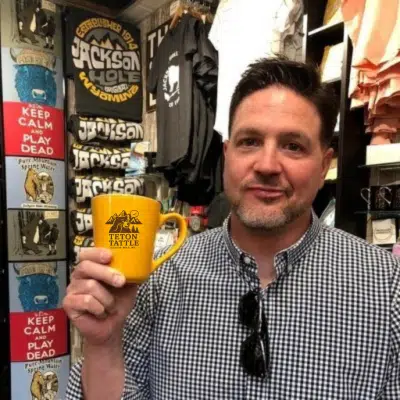
AntlersArch founder and the voice behind Teton Tattle.